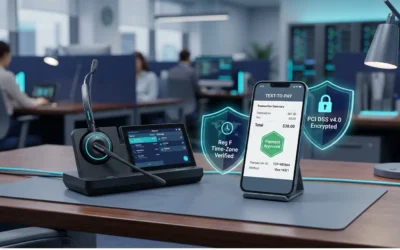

TL;DR Summary: Traditional payment processors frequently terminate Accounts Receivable Management (ARM) merchant accounts under Category Code (MCC) 7322 due to misclassified risk, unexpected chargeback spikes, and regulatory scrutiny. When a standard processor abruptly freezes funds or terminates a MID, an agency’s cash flow halts instantly. Embedded compliance solves this by integrating real-time chargeback mitigation, automated BIN screening, and CFPB-aligned risk scoring directly into the payment gateway—insulating ARM businesses from sudden merchant account terminations and MATCH list placements.
Introduction: The Hidden Instability of Generic Payment Gateways
For Accounts Receivable Management (ARM) businesses, debt buyers, and legal recovery firms, the most dangerous moment in business operations isn’t a missed collection goal—it is a sudden email notification from your payment processor stating: “Your merchant account has been suspended due to policy violations.”
Generic payment processors and mainstream aggregators are architected for low-risk coffee shops, SaaS startups, and standard retail storefronts. They are fundamentally unequipped to handle the regulatory friction and chargeback dynamics of Merchant Category Code (MCC) 7322.
Account termination is not an unpredictable accident; it is the inevitable outcome of misaligned risk architecture.
When a traditional processor drops an ARM merchant, the fallout is instantaneous: frozen cash reserves, interrupted automated recurring billing, and potential placement on the MATCH list (Terminated Merchant File). Protecting your business requires shifting from generic payment gateways to specialized infrastructure where compliance is embedded directly into the transaction workflow.
Aggregator Comparison
- Generic Payment Aggregator: One-Size-Fits-All Risk Model Unexpected Account Termination
- Embedded Compliance Platform: Dedicated MCC 7322 Underwriting Permanent Processing Stability
The Three Triggers Behind MCC 7322 Account Terminations
Traditional acquirers operate on tight risk margins. When an ARM agency processes payments through a standard merchant account, three primary operational triggers cause the processor’s automated risk systems to freeze or terminate the Merchant Identification Number (MID).
The 3 Processor Termination Triggers
- Trigger 1 (Chargeback Spikes): Exceeding Visa VAMP or Mastercard ECP 0.9% ratio thresholds.
- Trigger 2 (MCC Misclassification): Attempting to process ARM receivables under standard retail or consulting codes.
- Trigger 3 (Regulatory Reputational Risk): CFPB scrutiny or civil litigation creating perceived acquirer liability.
- Chargeback Spikes and Card Brand Monitoring Thresholds
Debt collection inherently carries a higher propensity for consumer disputes than traditional e-commerce. A consumer may agree to a settlement over the phone, but later regret the decision and file a dispute with their issuing bank claiming “unauthorized transaction.”
Card networks enforce strict monitoring programs:
- Visa Acquirer Monitoring Program (VAMP): Monitors combined fraud and dispute ratios. Crossing a 0.9% dispute ratio triggers heavy monthly fines for the acquiring bank.
- Mastercard Excessive Chargeback Program (ECP): Imposes escalating penalties on processors that fail to curb high-dispute merchants.
Because generic processors aggregate risk across thousands of businesses, they will immediately terminate a high-risk MCC 7322 account to protect their own standing with Visa and Mastercard rather than helping the merchant resolve the underlying dispute causes.
- MCC Misclassification & Unapproved Aggregation
Some processors attempt to board collection agencies under improper category codes—such as MCC 7399 (Business Services) or MCC 8999 (Professional Services)—to bypass high-risk underwriting checks.
This practice constitutes card brand violation. During routine audits, issuing banks identify the true nature of the transactions (debt recovery), triggering immediate account termination, fund holds, and potential placement on the MATCH list.
- CFPB Scrutiny and Acquirer Reputational Exposure
Acquiring banks are legally liable for systemic non-compliance occurring on their networks. Under CFPB enforcement guidelines, processors can be held accountable for facilitating illegal collection practices or unauthorized payment attempts.
If an agency faces regulatory inquiries or consumer class-action complaints, a traditional processor will offboard the account immediately to insulate itself from legal liability.
The Anatomy of Account Paralysis: Freezes, Reserves, and the MATCH List
When a traditional processor terminates an MCC 7322 merchant, the operational consequences unfold rapidly:
| Metric | Traditional Processor Drop | Payscout Embedded Model |
|---|---|---|
| Account Stability | Fragile: High termination risk | Dedicated MID stability |
| Reserve Holds | 180-day rolling capital lock | Transparent risk terms |
| Dispute Handling | Manual: Post-chargeback response | Pre-dispute automated deflection |
| MATCH List Protection | Zero defense against TMF placement | Proactive compliance guard |
- 180-Day Reserve Holds: Processors typically freeze 100% of the merchant’s processed funds for six months to cover potential incoming chargebacks, starving the collection agency of operational liquidity.
- Disruption of Recurring Payment Plans: Automated payment arrangements, IVR setups, and web portal checkouts stop functioning instantly, leading to lost recovery yield across thousands of consumer accounts.
- Placement on the MATCH List (TMF): If an account is closed due to excessive chargebacks or compliance failure, the processor may place the business and its principals on Mastercard’s MATCH database. This effectively blacklists the owners from obtaining merchant processing anywhere in North America for up to five years.
The Solution: How Embedded Compliance Delivers Processing Stability
Permanent processing stability requires an acquiring architecture built specifically for the realities of Accounts Receivable Management.
By embedding compliance controls directly into the payment gateway—linking pre-authorization screening, automated dispute deflection, and specialized bank sponsorship—ARM merchants operate with total stability.
| Flow Stage | Processing Action | System Function & Outcome |
|---|---|---|
| 1. Payment Initiation | Consumer Initiates Payment | Triggers real-time transaction routing pipeline |
| 2. BIN Level Validation | Real-Time BIN Lookup | Validates card type and suppresses restricted card types (e.g., HSA/FSA) |
| 3. Regulatory Compliance Gate | CFPB / Time-Zone Gate | Verifies consumer consent records and validates allowable outreach hours |
| 4. Chargeback Prevention | Pre-Dispute Deflection | Intercepts disputes automatically before chargeback escalation |
| 5. Final Settlement | Settled Revenue & Growth | Ensures clean, compliant merchant account settlement |
Real-Time Pre-Dispute Deflection (Ethoca & Verifi RDR)
Rather than waiting for a consumer inquiry to turn into a formal chargeback, an embedded compliance gateway integrates directly with card brand pre-dispute networks (such as Visa Rapid Dispute Resolution and Mastercard Ethoca).
When a consumer calls their bank to dispute a payment, the gateway receives a real-time alert and automatically refunds the transaction based on pre-set rules—neutralizing the dispute before it ever counts against the agency’s VAMP/ECP chargeback ratio.
Real-Time BIN Screening
The gateway parses the Bank Identification Number (BIN) of every card at the moment of entry. It automatically blocks prohibited payment methods—such as HSA, FSA, or government-issued benefit cards—and enforces fee compliance, preventing illegal convenience fee additions on debit cards that lead to cardholder complaints.
Specialized Acquirer Bank Sponsorship
Payscout maintains direct acquiring relationships with financial institutions that specialize in high-risk, highly regulated industries. Because our underwriting teams understand the ARM ecosystem, MCC 7322 accounts are boarded with realistic, pre-approved chargeback parameters and dedicated risk oversight—eliminating the risk of sudden policy shutdowns.
Frequently Asked Questions (FAQ)
Why do traditional payment processors terminate MCC 7322 merchant accounts?
Traditional processors are built for low-risk retail and e-commerce. They terminate MCC 7322 collection agencies due to strict card brand chargeback thresholds (such as Visa VAMP), regulatory pressure from the CFPB, and an inability to underwrite specialized high-risk workflows.
What is the MATCH list (TMF) in payment processing?
The Member Alert to Control High-Risk (MATCH) list, also known as the Terminated Merchant File (TMF), is a database maintained by Mastercard. When a processor terminates a merchant for cause—such as excessive chargebacks or fraud—being placed on MATCH prevents the business from opening new merchant accounts for up to five years.
How does embedded compliance prevent merchant account termination?
Embedded compliance integrates real-time chargeback deflection, BIN-level payment screening, and automated consent capture directly into the payment gateway, resolving consumer disputes before they escalate into formal card network chargebacks.
About the author: Cleveland Brown is the Co-founder and CEO of Payscout.. Drawing on a foundation in philosophical frameworks from UCLA, he has spent over 25 years architecting global payment systems and scaling high-performing corporate cultures. He is a pioneer in removing friction from global commerce, specializing in cross-border payment infrastructure, automated regulatory compliance shields, and the next generation of financial technology.