TL;DR Summarys
- Managing High-Risk Operations: Operating in a “high-risk” or “managed-risk” category (such as charitable organizations, medical practices, or mobile-heavy businesses) does not mean you have to operate in fear. Simple, concrete steps can mitigate fraud and cyber threats.
- Capitalizing on Mobile Payments: The global mobile payment market now processes trillions of dollars annually. Businesses shouldn’t avoid this revenue stream out of safety concerns; instead, they should secure it through basic due diligence.
- Mobile Security Best Practices: To lock down mobile transactions, businesses must ensure secure network connections (never processing on public Wi-Fi), require strict authentication (like CVV codes and 2FA), and partner with trusted processors that utilize end-to-end encryption and tokenization.
- Protecting Non-Profits: Because charitable organizations typically have less stringent financial oversight than for-profit companies, they can inadvertently attract bad actors. Implementing strict payment security is critical to protecting their mission and funds.
There is a risk of fraud inherent to any business, but it is an undeniable reality that some occupations and payment methods are considered far more vulnerable to exploitation than others. It is not just billion-dollar conglomerates that need to worry about cybersecurity and risk mitigation.
Whether you operate a charitable organization, a medical practice, or rely heavily on remote mobile transactions, falling into a “high-risk” or “managed-risk” category does not mean you have to operate in fear. There are concrete, simple steps you can take to mitigate or even completely eliminate that risk.
Here is how you can protect your organization and your customers in 2026.
1. Securing the Trillion-Dollar Mobile Payment Market
A few years ago, industry experts projected mobile payment revenues to reach roughly $503 billion by 2020. Fast forward to 2026, and global mobile payments have shattered those early estimates, now processing multiple trillions of dollars annually.
This is not an income source you want to miss out on simply due to anxiety about safety. Fortunately, safer mobile payment practices are very similar to those used for traditional credit or debit card transactions—it all boils down to due diligence.
To lock down your mobile environments:
- Network Security: Ensure that the Wi-Fi or cellular network the mobile device is linked to is sound and secure. Never process transactions over public Wi-Fi.
- Authentication: If a mobile payment is not completed face-to-face, require a CVV code. Furthermore, consider adding a two-factor authentication (2FA) method that requires consumers to respond to a verification code before the transaction can be completed.
- Processor Trust: Always partner with a trustworthy mobile payment processing provider that utilizes end-to-end encryption and tokenization.
2. Best Practices for a Safe Non-Profit
For the most part, non-profits attract honest, decent people committed to making the world a better place. Sadly, because the financial oversight of non-profits is generally less stringent than the oversight of for-profit organizations, that environment can inadvertently attract the unscrupulous.
According to fraud experts, those with closed-off, insular, or bullying leadership are far more likely to be engaged in fraud. The absolute best way to prevent abuses of a non-profit’s funds is to enforce a strict mandate requiring transparency from the top down.
Beginning with the officers, emphasize the necessity for open books and candid, regular discussions regarding the organization’s finances. Promoting a healthy, transparent culture can make a massive difference. Additionally, employ a firm with a stellar reputation that is specifically equipped to handle non-profit payment processing securely.
3. Pain-Free, Compliant Medical Billing
In the United States alone, annual healthcare spending is approaching the $5 trillion mark. Because there is so much money being spent and handled by an incredibly vast network of people and organizations, aggressive regulations (like HIPAA) are already in place to reduce medical fraud.
However, basic familiarity with these rules is not enough. You must make comprehensive compliance with medical billing and fraud-prevention practices a top priority. Set the example by actively engaging in continued education and training for your entire staff.
To tighten up your medical billing security:
- Internal Protections: Consider making compliance a key element of employee evaluations and implement firm policies to protect and encourage whistleblowers.
- Regular Auditing: Perform frequent audits—or hire external auditors to do so—and compare your business’s billing practices with comparable providers in your area. Sometimes, a simple comparison is all it takes to identify questionable finances.
- Specialized Gateways: Choose a healthcare payment processing provider with a specialization in compliant billing.
Global Commerce with Payscout
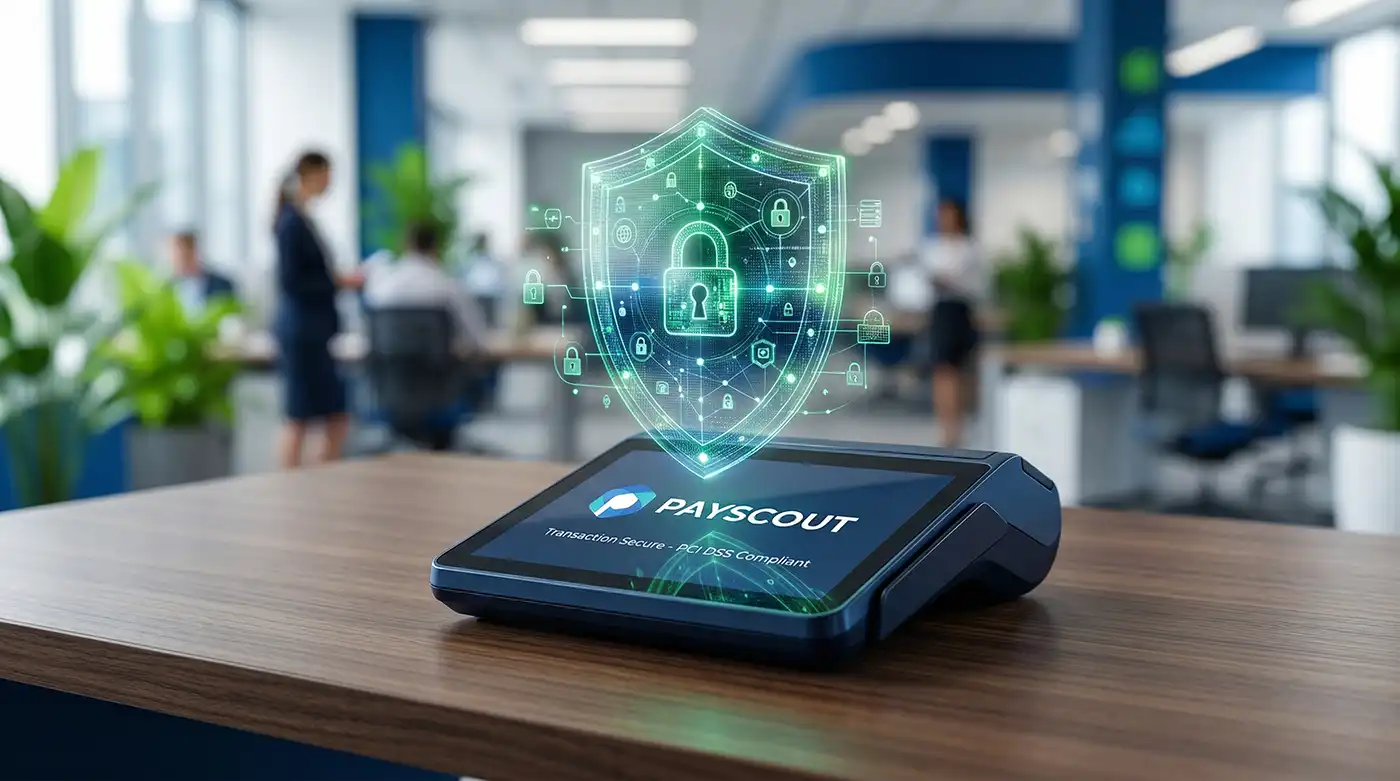
Payscout has earned international praise as a new-generation global payment processing provider, serving thousands of clients across a multitude of industries. Our proprietary “Go Global Now” technology platform gives merchants access to over 100 countries, billions of consumers, and trillions of dollars in purchasing power.
Payscout is recognized as one of the few providers capable of delivering a true global payment solution that confidently encompasses all merchant risk verticals—including mobile payments, healthcare, and the non-profit community.
Ready to process payments with complete peace of mind? Learn how secure and efficient payment processing can be by contacting Payscout today.
Frequently Asked Questions: Security in High-Risk Processing
How to secure mobile payments for high-risk businesses? High-risk businesses can secure their mobile payments by strictly using PCI-compliant mobile card readers with point-to-point encryption. Additionally, merchants should avoid public Wi-Fi networks, require CVV verification for manual entries, and employ two-factor authentication (2FA) for remote mobile transactions to drastically reduce the risk of chargebacks.
What are the fraud prevention best practices for nonprofits in 2026? To prevent donor fraud and internal embezzlement, nonprofits must build a culture of financial transparency from the leadership down. Best practices include keeping open books, holding candid financial meetings, avoiding insular management structures, and utilizing an established payment processor tailored specifically for nonprofit accounting integrations.
What should I look for in compliant healthcare payment processing solutions? Compliant healthcare payment solutions must bridge the gap between PCI DSS (for credit card security) and HIPAA (for patient data privacy). Medical practices should look for processors that offer encrypted virtual terminals, tokenization, and recurring billing systems that restrict internal employees from accessing raw patient financial data, paired with ongoing compliance training.
How to mitigate payment fraud in risky business verticals? Mitigating fraud in high-risk verticals requires a combination of technology and operational vigilance. Businesses should leverage a secure payment gateway with real-time risk logic, implement regular independent audits, foster a culture that protects whistleblowers, and partner exclusively with payment providers who specialize in their specific managed-risk industry.