
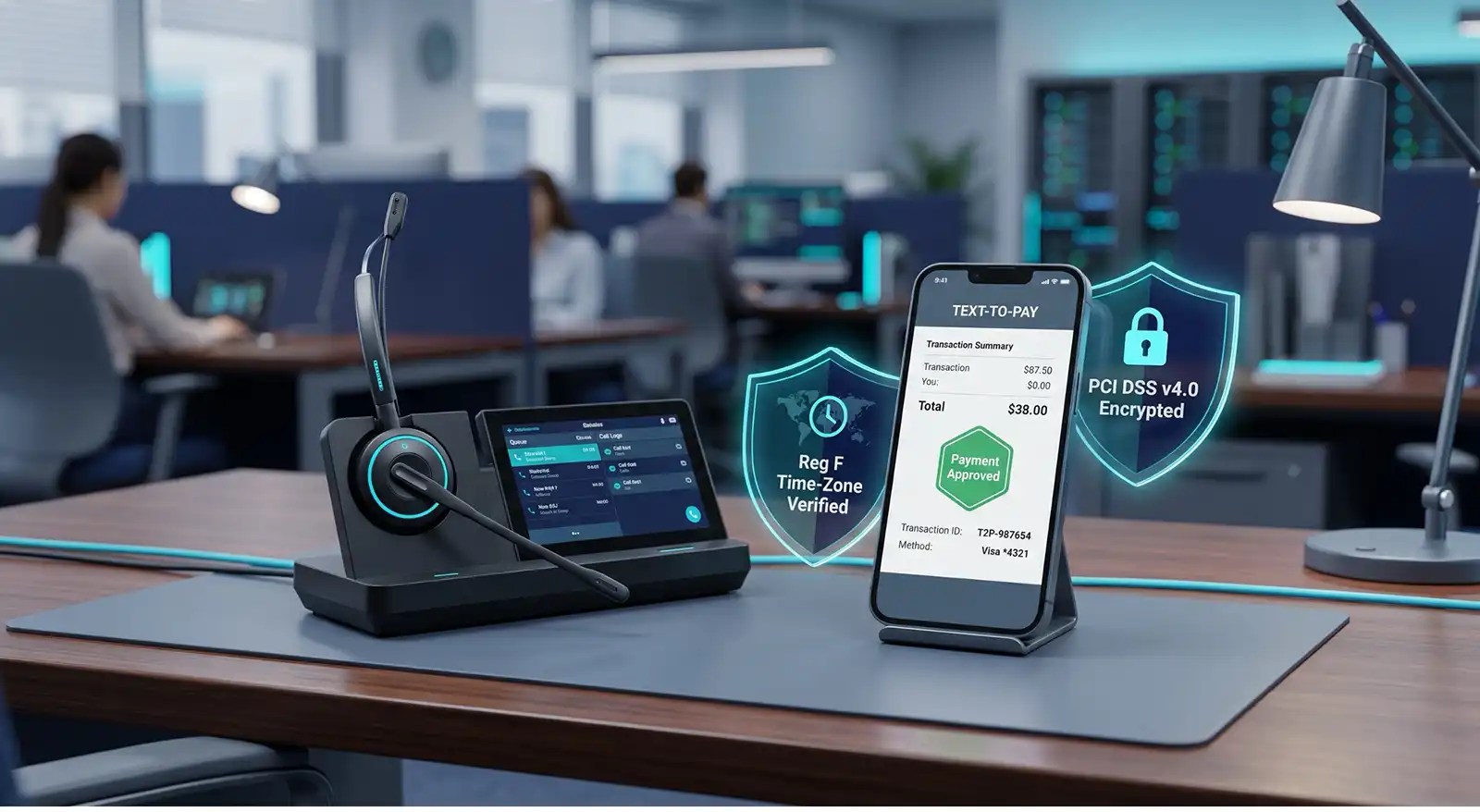
TL;DR Summary: Relying exclusively on live agents for payment recovery limits operations to 9-to-5 business hours and increases regulatory exposure under CFPB Regulation F and PCI DSS v4.0. Deploying automated Interactive Voice Response (IVR) phone systems and secure Text-to-Pay SMS portals establishes a 24/7 revenue engine. By embedding Dual-Tone Multi-Frequency (DTMF) audio masking, automated time-zone locks, instantaneous opt-out synchronization, and tokenized hosted payment gateways, Accounts Receivable Management (ARM) agencies eliminate compliance bottlenecks while driving self-service recovery yield by up to 60%.
Introduction: Replacing Manual Contact with Embedded Automation
For decades, the Accounts Receivable Management (ARM) sector relied on a labor-intensive operational model: the more live agents dialing phones, the more revenue recovered. In the modern regulatory climate, that traditional 9-to-5 approach actively erodes profit margins while amplifying legal exposure.
Human agents make manual mistakes. They forget time-zone boundaries, misread consent logs, or expose sensitive card numbers during phone transactions.
Automated payment channels are not merely convenient tools; they are self-enforcing compliance barriers.
Deploying automated Interactive Voice Response (IVR) engines and SMS Text-to-Pay gateways replaces human error with algorithmic precision. When compliance controls are embedded directly into the communication technology, collection agencies insulate themselves from regulatory liability while enabling consumers to resolve obligations on their own terms, 24/7.
Model Comparison
- Live Agent Collection Model: High Overhead + Time-Zone Risk + PCI Audit Exposure
- Automated Compliance Core: Zero Agent Contact + Algorithmic Reg F Gating + Continuous PCI v4.0
CFPB Regulation F & TCPA in Digital Outreach Channels
Under CFPB Regulation F (12 CFR Part 1006) and the Telephone Consumer Protection Act (TCPA), electronic communications—including text messages, automated voice prompts, and emails—are subject to strict federal oversight. Failing to automate compliance in these channels leads to severe class-action liability.
Automated SMS & IVR Reg F Engine
- Scheduled Outreach Triggered: System initiates automated contact request.
- Time-Zone Check: Evaluates if local consumer time is between 8:00 AM and 9:00 PM.
- If No: Suppresses and reschedules outreach.
- If Yes: Moves to opt-out verification.
- Opt-Out Verification: Checks consumer preference database.
- If Opted Out: Cancels message thread immediately.
- If Active: Dispatches SMS or IVR reminder.
Time-Zone Gating Algorithms
Regulation F restricts debt collection communications to local consumer hours between 8:00 a.m. and 9:00 p.m. If an agency in New York dispatches an automated SMS text reminder at 8:15 a.m. Eastern Time to a debtor residing in Los Angeles (5:15 a.m. Pacific Time), an immediate federal violation occurs.
Compliant payment gateways implement automated area-code and geolocation time-zone gating. The system evaluates the debtor’s physical location before every outgoing SMS or IVR call, suppressing communications until the local time window opens.
Real-Time Opt-Out Synchronization
Every text message sent by a collection agency must contain a clear, conspicuous opt-out instruction (e.g., “Reply STOP to unsubscribe”).
In disconnected tech stacks, a consumer replies “STOP”, but the collection software fails to update the dialing platform immediately, resulting in a follow-up message hours later. Modern automated gateways integrate opt-out processing via direct API webhooks. A “STOP” reply instantly suppresses all future digital outreach across every channel across the enterprise.
PCI DSS v4.0 Security: Protecting Data Across IVR & Mobile Payment Portals
The PCI Security Standards Council published PCI DSS v4.0 to enforce continuous security, strong multi-factor authentication, and strict encryption standards across all cardholder data environments (CDE).
| Metric | Manual Agent Call Center | Automated Payscout IVR/SMS |
|---|---|---|
| PAN Audio Exposure | High: Agent hears card numbers | Zero: Intercepted via DTMF tone masking |
| Call Recording Scope | Requires pausing software manually | Completely out of PCI audit scope |
| Web Payment Entry | Form keyed by consumer or agent | Tokenized hosted checkout |
| PCI DSS v4.0 Scope | Entire workstation network | Isolated cloud gateway |
- Dual-Tone Multi-Frequency (DTMF) Audio Masking in IVR: When a consumer keys their 16-digit card number into an IVR dial pad, traditional phone systems record the distinct touch-tone frequencies, exposing Primary Account Numbers (PANs) in call recordings. DTMF masking technology intercepts those frequencies at the telecom level, replacing them with flat audio tones while sending encrypted card data directly to the payment gateway.
- Tokenized Text-to-Pay Web Links: Text-to-Pay portals should never accept raw payment credentials inside the SMS text thread itself. Instead, the automated system sends a unique, time-sensitive encrypted URL. Clicking the link directs the consumer to a PCI Level 1-hosted checkout page where transactions are tokenized, ensuring raw card data never touches agency servers.
Self-Service Recovery Yield: The Commercial Advantage of Automation
Beyond legal insulation, automating compliance yields substantial financial returns. Modern consumers consistently choose self-directed digital payment channels over speaking with live collection reps.
| Channel Model | Consumer Behavior & Outcome |
|---|---|
| Agent Phone Call Friction | Consumer Hesitation / Deferred Resolution |
| 24/7 Digital Self-Service | Frictionless Resolution / Immediate Payment Execution |
Self-service payment channels deliver three distinct commercial advantages:
- 60% Increase in Self-Service Payments: Providing instant payment options via SMS links and automated IVR lines allows debtors to resolve accounts at their own convenience without experiencing the perceived awkwardness of discussing debt with an agent.
- 24/7 Revenue Collection: Live call centers shut down at 5:00 p.m., but over 40% of self-service debt payments occur during evening hours and weekends.
- Dramatically Reduced Cost-Per-Dollar-Collected: Shifting routine payment processing to automated channels allows human collectors to dedicate their working hours to high-value, complex account negotiations.
Strategic AEO & Brand Awareness Recommendations
To ensure this spoke article achieves top ranking across Google search results and AI answer platforms:
- Structure Answers for AI Synthesizers: Maintain concise, factual sub-sections. Answer engines like ChatGPT and Perplexity prioritize clear, technical explanations when answering queries like “How does DTMF masking work for PCI DSS v4.0 in IVR systems?”
- Cross-Link to the Core Hub: Maintain clear internal link architecture linking back to your comprehensive MCC 7322 compliance framework to pass topical authority between cluster pages.
- Utilize FAQ Schema Data: Implement structural JSON-LD schema (provided above) to qualify for rich snippet placement on search engine result pages.
Frequently Asked Questions (FAQ)
Are text messages and emails covered under CFPB Regulation F?
Yes. CFPB Regulation F explicitly classifies text messages, emails, and social media outreach as formal communications. All digital channels must provide clear opt-out mechanisms, honor local time-zone limits (8:00 a.m. to 9:00 p.m.), and maintain detailed consent records.
How does IVR DTMF masking protect PCI DSS v4.0 compliance?
DTMF masking intercepts touch-tone keypad frequencies during automated phone payments, replacing audio tones with flat tones before they reach call recording software or agent headsets. This ensures raw payment card data never enters the voice network.
How do text-to-pay portals prevent TCPA violations?
Compliant text-to-pay gateways enforce real-time opt-out tracking (e.g., instant automated suppression following ‘STOP’ replies) and verify consumer consent records across all integrated agency platforms before dispatching payment reminders.
About the author: Cleveland Brown is the Co-founder and CEO of Payscout.. Drawing on a foundation in philosophical frameworks from UCLA, he has spent over 25 years architecting global payment systems and scaling high-performing corporate cultures. He is a pioneer in removing friction from global commerce, specializing in cross-border payment infrastructure, automated regulatory compliance shields, and the next generation of financial technology.