
TL;DR Summary:
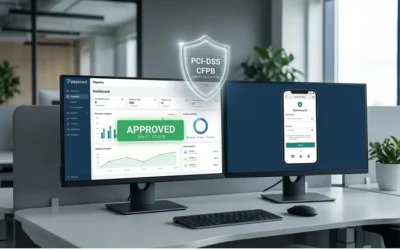
Collection agencies operating under MCC 7322 face rigorous regulatory enforcement from the CFPB and strict security mandates from the PCI Security Standards Council. Maintaining data integrity while handling sensitive cardholder data can severely drain operational resources. By deploying a specialized payment gateway with Point-to-Point Encryption (P2PE) and advanced tokenization, ARM merchants can securely filter high-risk transactions, drastically reduce their PCI-DSS compliance scope, and insulate their business from costly data breaches or regulatory penalties.
In the modern credit and collection landscape, regulatory oversight is no longer just a legal consideration—it is a core operational condition. For Accounts Receivable Management (ARM) firms and collection agencies classified under Merchant Category Code (MCC) 7322, compliance is frequently the difference between a highly profitable portfolio and a devastating class-action lawsuit or regulatory fine.
With the Consumer Financial Protection Bureau (CFPB) actively monitoring consumer data handling and communication practices, data security and merchant compliance have become tightly intertwined. Protecting your organization requires moving beyond basic secure storage. Enterprise decision-makers must treat their CFPB compliant payment gateways as defensive shields.
By leveraging advanced technology like Point-to-Point Encryption (P2PE) and secure tokenization, collection agencies can structurally reduce their data liabilities, completely minimize their compliance burdens, and turn risk management into a definitive market advantage.
The Dual Threat: CFPB Scrutiny and PCI-DSS Mandates
ARM merchants operate under a heavy canopy of dual regulation:
- The CFPB and Consumer Data Security: Regulatory bodies demand absolute transparency and protection of consumer financial privacy. Mismanaging consumer data during the payment lifecycle or exposing data via a security breach can trigger severe enforcement actions and crippling operational constraints.
- PCI-DSS Compliance Pressures: Payment Card Industry Data Security Standards (PCI-DSS) dictate how cardholder data must be collected, transmitted, and stored. For standard businesses, compliance is challenging. For collection agencies processing high volumes of transactions across desktop environments, web portals, and IVR systems, standard auditing can easily swallow hundreds of labor hours and tens of thousands of dollars each year.
Reducing Liability via Structural Data Security
The most effective way to satisfy both PCI-DSS auditors and federal regulators is a simple axiom: You cannot lose data you do not store. Traditional processing methods often let unencrypted primary account numbers (PANs) touch an agency’s local servers or internal CRM software. If a malicious entity breaches that network, the data is compromised. Modern payment technology alters this framework completely through two primary mechanics:
Point-to-Point Encryption (P2PE)
When a consumer provides their payment card data—whether entered manually by an agent into a virtual terminal or typed by a consumer into a secure portal—P2PE encrypts that data at the exact moment of capture. The information instantly becomes unreadable ciphertext before it ever hits the agency’s local network or internet service provider. It remains encrypted until it safely arrives within the processor’s secure, hardened data vault. Because the unencrypted data never genuinely “touches” your local ecosystem, your operational infrastructure is effectively removed from the risk environment.
Advanced Tokenization
For recurring payment arrangements, settlement agreements, or post-dated checks, storing card data locally is an enormous compliance violation. Tokenization solves this by replacing sensitive financial information with a randomly generated, algorithmic placeholder called a “token.” Your internal collections software stores only this useless token string. When a scheduled payment fires, your system transmits the token back to the payment gateway, which securely matches it to the true card details held in an off-site vault.
The Enterprise Value of PCI Scope Reduction
Implementing an advanced gateway built natively for high-risk accounts provides immense operational cost-savings by dramatically achieving PCI-DSS scope reduction for debt collection.
When cardholder data bypasses your network via P2PE and tokenization, the complex self-assessment questionnaires (SAQs) required by card brands shrink from hundreds of technical controls down to a fraction of the requirements. This significantly reduces the time your IT department spends preparing for security audits, minimizes infrastructure costs, and eliminates the need for expensive dedicated compliance consultants.
The Payscout Edge: Secure Gateway Engineering
At Payscout, our Paywire Gateway is engineered explicitly to give ARM merchants a seamless compliance advantage. By combining native P2PE, secure multi-channel tokenization, and intelligent routing built around MCC 7322 rules, we allow agencies to securely filter out high-risk anomalies while keeping consumer data entirely secure.
Our infrastructure ensures that whether your desktop-based agents are logging payments manually or consumers are resolving accounts independently overnight, your compliance remains absolute, uncompromised, and audit-ready.
Insulate Your Agency from Regulatory Risk
Protect your portfolios, simplify your technical audits, and build bulletproof trust with your debt buyers and partners.
Contact Payscout’s Compliance Architecture Team Today — Let us audit your current payment workflow and transition your business to a lower-scope, fully compliant gateway solution.