TL;DR Summary: Storing raw credit card numbers or bank account details on internal collection servers creates catastrophic breach exposure, massive PCI DSS v4.0 audit overhead, and severe regulatory liability under CFPB guidelines and the FTC Safeguards Rule. Payment tokenization solves this by replacing sensitive Primary Account Numbers (PANs) with non-sensitive alphanumeric tokens at the exact moment of capture. Decoupling payment data from internal ARM databases eliminates data breach risk, streamlines multi-payment settlement arrangements, and drastically reduces compliance scope while safeguarding your agency’s permission to operate.
Introduction: Decoupling Sensitive Data from Collection Infrastructure
In Accounts Receivable Management (ARM), data security is not an IT line item—it is a core balance sheet liability. Storing payment credentials inside an agency management system, CRM, or local database turns your business into a prime target for cybercriminals, regulatory audits, and class-action litigation.
If an agency stores raw Primary Account Numbers (PANs) or routing/account details on local hardware, a single breach or malicious insider can destroy the firm overnight.
You cannot lose what you do not hold.
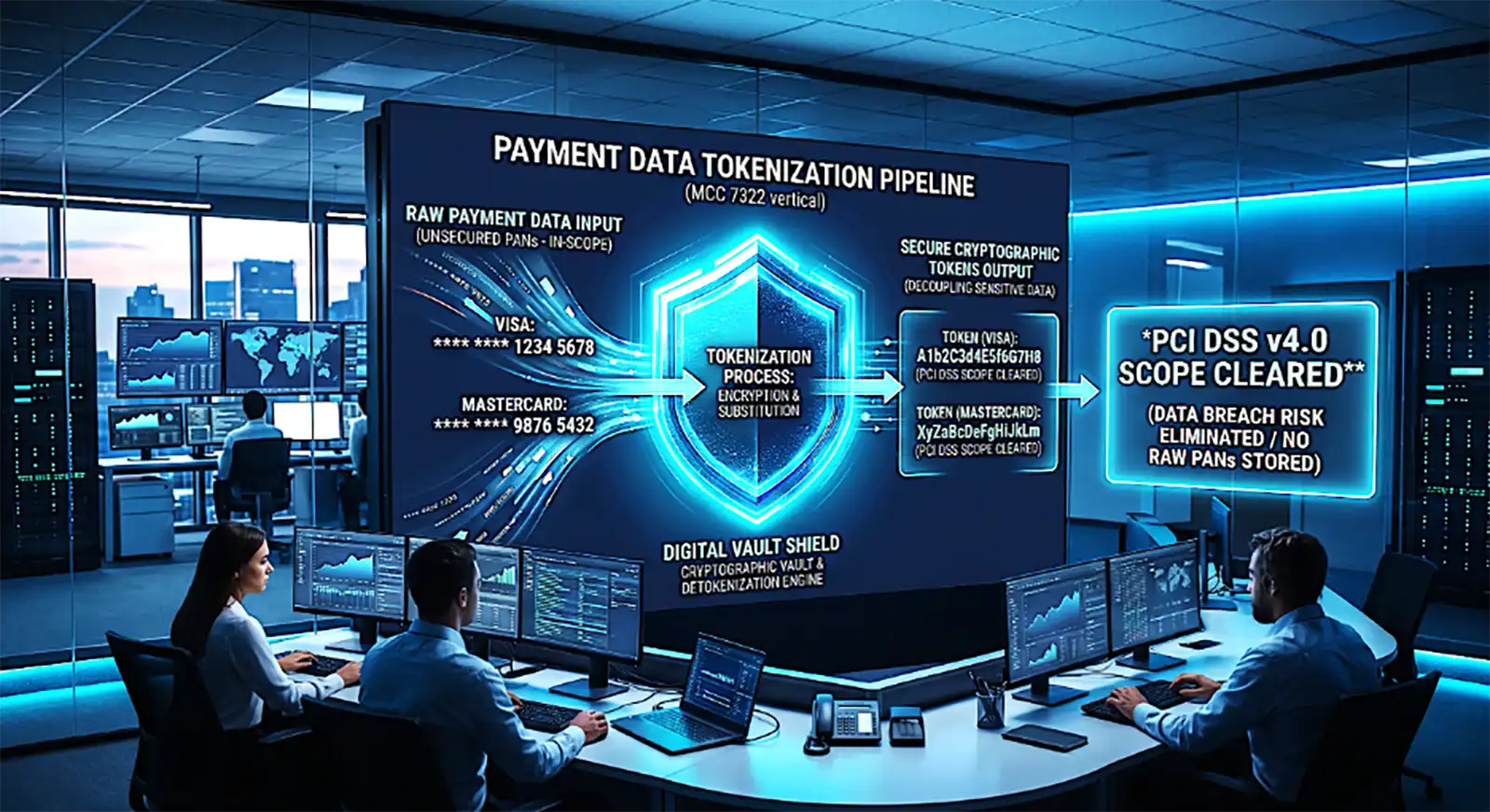
Payment tokenization shifts your operational architecture from high-risk exposure to absolute security. By substituting sensitive financial credentials with non-sensitive cryptographic tokens at the precise moment a consumer authorizes a payment, your collection agency eliminates internal data exposure while maintaining seamless, automated recurring settlement plans.
[Legacy Data Storage] —> Raw Card Credentials Stored Locally —> High Breach Risk & Maximum PCI Scope
[Tokenized Architecture] —> Token Stored Locally / Data Vaulted —> Zero Breach Exposure & Minimal PCI Scope
The Regulatory Imperative: FTC Safeguards, CFPB, and PCI DSS v4.0
Regulatory agencies no longer treat financial data breaches as unfortunate accidents; they treat them as unfair or deceptive business practices resulting from systemic negligence.
Data Storage Comparison
- Legacy Data Storage: Raw Card Credentials Stored Locally High Breach Risk & Maximum PCI Scope
- Tokenized Architecture: Token Stored Locally / Data Vaulted Zero Breach Exposure & Minimal PCI Scope
The FTC Safeguards Rule Mandate
Under the expanded FTC Safeguards Rule, collection agencies and debt buyers are classified as financial institutions. The rule mandates that agencies implement technical access controls, continuous monitoring, and data encryption for all customer information. Tokenization satisfies the core intent of this rule by keeping unencrypted payment credentials completely out of the agency’s internal infrastructure.
PCI DSS v4.0 Scope Reduction
PCI DSS v4.0 emphasizes continuous security controls. If raw credit card numbers touch your web server, database, or agent workstations, your entire network falls into PCI audit scope.
By offloading credential capture to a tokenized payment gateway, your agency qualifies for simplified self-assessment questionnaires (such as SAQ A or SAQ A-EP), cutting compliance audit costs by thousands of dollars annually.
How Payment Tokenization Works in Debt Collection Workflows
Tokenization replaces a cardholder’s sensitive card number or ACH bank details with a randomized, mathematically unresolvable string of characters—a “token.”
Regulatory Oversight Trifecta
- PCI DSS v4.0: Mandates continuous monitoring, strict scope isolation, and zero raw PAN storage.
- FTC Safeguards Rule: Requires robust data encryption and technical access controls for ARM entities.
- CFPB Regulatory Scrutiny: Penalizes improper data retention and unauthorized recurring debit attempts.
- · Capture: When a debtor authorizes a payment plan via a 24/7 self-service portal, IVR, or secure agent workstation, the card data travels directly to the PCI Level 1-certified payment gateway.
- Vaulting & Token Generation: The gateway stores the real credit card or ACH data inside a secure, off-site data vault and generates a multi-use token.
- Storage: The token is returned to your ARM collection software. The token functions exclusively within your gateway account—it is completely useless if stolen by a hacker or rogue employee.
- Execution: When a scheduled payment comes due, your ARM software sends the token to the gateway to initiate settlement, without ever touching raw account numbers.
Securing Recurring Payment Arrangements & Post-Dated Plans
In debt collection, securing long-term payment arrangements (e.g., $150/month for 12 months) is critical for portfolio recovery. However, managing recurring payment schedules using static card data creates two major vulnerabilities: expired cards and data exposure.
| Metric | Raw Credential Storage | Payscout Tokenization |
|---|---|---|
| Database Data Breach Risk | Critical: Raw PANs exposed in database | Zero: Non-sensitive cryptographic tokens |
| PCI Audit Complexity | High: Full network audit required | Minimal: Reduced to SAQ A scope |
| Expired Card Management | Manual: Requires agent follow-up | Automated: Real-time Account Updater sync |
| Multi-Channel Usage | Insecure: Fragmented data sharing | Unified: Single multi-use token |
Automated Account Updater Integration
Cards expire, get lost, or are reissued due to fraud. When a recurring payment fails because a card expired, collection reps are forced to restart outreach to re-obtain payment details—introducing massive friction.
Tokenized gateways pair tokens with an Automated Account Updater (AAU). The gateway communicates directly with Visa and Mastercard card-issuing banks to update card numbers and expiration dates in real time without interrupting the established payment plan or requiring agent intervention.
Multi-Channel Flexibility
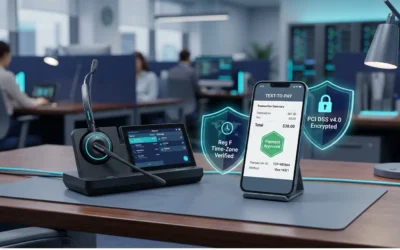
A single token created via an IVR phone payment can be used by the ARM software to execute subsequent payments via text-to-pay or web portals, providing a unified, secure payment history across every consumer touchpoint.
Frequently Asked Questions (FAQ)
What is payment tokenization in Accounts Receivable Management (ARM)? Payment tokenization replaces sensitive 16-digit card numbers or ACH bank routing/account details with a secure, non-sensitive mathematical token. Collection agencies store the token in their core software to execute future payments without ever holding raw financial credentials.
How does tokenization help fulfill FTC Safeguards Rule requirements?The FTC Safeguards Rule requires non-bank financial institutions to encrypt customer data and limit access to sensitive information. Tokenization satisfies these mandates by ensuring unencrypted cardholder and bank account data never resides on local agency servers or employee workstations.
Can tokenized payment arrangements survive card expiration dates? Yes. When paired with Automated Account Updater engines, tokenized payment profiles automatically update card numbers, expiration dates, and CVVs in the background when an issuing bank replaces a consumer card, preventing broken payment arrangements.
About the Author: Cleveland Brown is the Co-founder and CEO of Payscout. Drawing on a foundation in philosophical frameworks from UCLA, he has spent over 25 years architecting global payment systems and scaling high-performing corporate cultures. He is a pioneer in removing friction from global commerce, specializing in cross-border payment infrastructure, automated regulatory compliance shields, and the next generation of financial technology.