TL;DR Summary: Storing raw credit card numbers or bank account details on internal collection servers creates catastrophic breach exposure, massive PCI DSS v4.0 audit overhead, and severe regulatory...
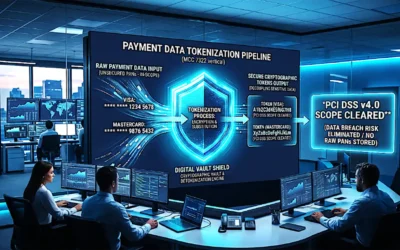

TL;DR Summary: Storing raw credit card numbers or bank account details on internal collection servers creates catastrophic breach exposure, massive PCI DSS v4.0 audit overhead, and severe regulatory...

TL;DR Summary: Traditional payment processors frequently terminate Accounts Receivable Management (ARM) merchant accounts under Category Code (MCC) 7322 due to misclassified risk, unexpected...

TL;DR Summary: Relying exclusively on live agents for payment recovery limits operations to 9-to-5 business hours and increases regulatory exposure under CFPB Regulation F and PCI DSS v4.0....

TL;DR Summary: High-risk Merchant Category Code (MCC) 7322 and CFPB Regulation F impose rigorous compliance mandates on Accounts Receivable Management (ARM) businesses. Relying on manual enforcement...

TL;DR Summary: Traditional cross-border settlement finality is slow, requiring funds to travel through multiple intermediary banks, subject to FX volatility while in transit. Payscout architectures...

TL;DR Summary: US e-commerce merchants expanding into Latin America face extreme checkout friction because the vast majority of local consumers do not use or trust traditional US credit card...
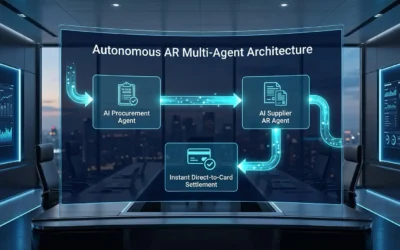
TL;DR Summary: Paying suppliers and contractors in Africa is historically slow and expensive for US businesses due to complex, multi-hop correspondent banking networks that extract unpredictable...

TL;DR Summary: US B2B merchants facing international expansion struggle with the high costs, complex compliance risks (OFAC, AML), and slow delivery times (3–5 business days) inherent in legacy...
TL;DR Summary: Treating compliance as a post-transaction afterthought creates severe legal exposure, high false decline rates, and partner misalignment. Payscout's Compliance Shield replaces...
TL;DR Summary: Speculative payment volume forecasting introduces severe financial and legal liabilities to growing enterprises. The Data Certainty Framework replaces backward-looking batch estimates...
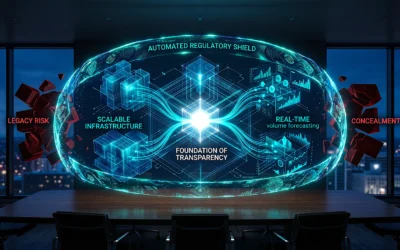
TL;DR Summary: A recent $120 million fraud judgment in the payment sector details intentional concealment and misrepresentation of payment volume—stark evidence of the systemic risk that occurs when...

TL;DR Summary: Traditional cross-border settlement finality is slow, requiring funds to travel through multiple intermediary banks, subject to FX volatility while in transit. Payscout architectures...

TL;DR Summary: Collection agencies operating under MCC 7322 face rigorous regulatory enforcement from the CFPB and strict security mandates from the PCI Security Standards Council. Maintaining data...
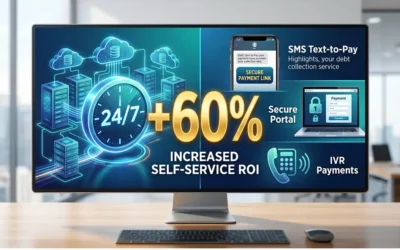
TL;DR Summary: Collection agencies relying solely on live agents for payment recovery are limited by 9-to-5 operating hours and high staffing overhead. By implementing modern payment automation—such...
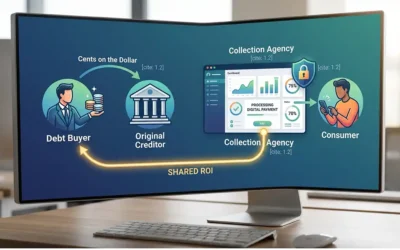
TL;DR Summary: In the Accounts Receivable Management (ARM) ecosystem, debt buyers acquire past-due portfolios from original creditors for a fraction of their face value—typically just four to seven...
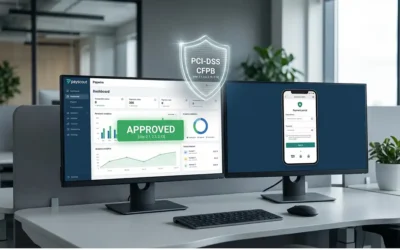
TL;DR Summary: Accounts Receivable Management (ARM) and collection agencies operating under MCC 7322 face unique payment processing challenges, including intense regulatory scrutiny and high-risk...

TL;DR Summary: The Modern Standard: In 2026, carrying cash is increasingly rare. Consumers expect the friction-free experience of using credit cards, debit cards, and digital wallets, largely driven...

TL;DR Summary: The Margin Saver: As credit card processing costs rise in 2026, convenience fees allow merchants to offer flexible digital payments without sacrificing their bottom line. Key...

TL;DR Summary: Securing a merchant account is difficult for businesses classified as "managed risk" or "high-risk". Traditional banks often reject these businesses due to unpredictable clientele,...

TL;DR Executive Summary Mainstream payment processors are increasingly de-risking their portfolios by forcing collection agencies (MCC 7322) into restrictive debit card and ACH-only payment models....

TL;DR Summary: TL;DR: As operating costs rise in 2026, many merchants are adopting Convenience Fee models to offset their credit card processing expenses. However, Visa enforces strict regulations...

TL;DR Summary: TL;DR: Brazil remains one of the fastest growing and most lucrative e-commerce markets in the world, with Latin American digital sales projected to reach $215 billion in 2026....

TL;DR Summary: TL;DR: True payment innovation requires anticipating the future of consumer behavior. In 2017, Payscout made history at Money20/20 Europe by launching the world's first live Virtual...

TL;DR Summary TL;DR: Financial technology (Fintech) has fundamentally transformed how underserved and unbanked communities interact with the global economy. By leveraging mobile payment processing,...

TL;DR Summary: TL;DR: A merchant account is a specialized business arrangement that acts as the bridge between your business, payment networks, and customer banks, allowing you to accept debit and...

TL;DR Summary: The Challenge: In the 2026 subscription economy, managing complex payment processing—like failed transactions, involuntary churn, and manual updates—drains team resources and delays...

TL;DR Summary: The Threat is Real: In the hyper-connected 2026 landscape, payment security is a matter of business survival. Past catastrophic data breaches show that vulnerabilities can lead to...

TL;DR Summary: The Global Opportunity: To scale revenue in 2026, merchants must tap into the massive purchasing power of the Asia-Pacific market and international Chinese consumers. The Power of...

TL;DR Summary: The New Baseline: In 2026, consumer patience is at an all-time low. Forcing customers to wait at a stationary cash register creates bottlenecks and costs you sales; mobile payment...

TL;DR Summary: The Ultimate Differentiator: In a market where products and software are easily replicated, exceptional customer service is no longer just an afterthought—it is the primary driver of...